Beyond the Lab: Unlocking the Entrepreneurial Mindset of High-Potential Researchers
By EMP Staff
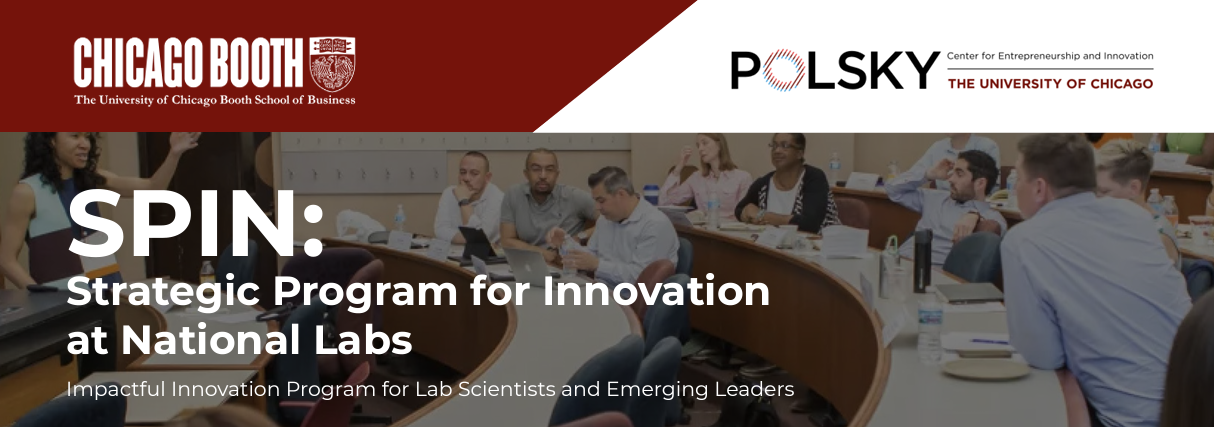
At the University of Chicago, the SPIN (Strategic Programs for Innovation at the National Labs) program focuses on three critical domains of learning around entrepreneurial and innovative thinking: the entrepreneurial mindset; the structure of entrepreneurship; and applied research in action. In this article, Dan Sachs, the Executive Director of the Polsky Center for Entrepreneurship and Innovation, discusses how the Entrepreneurial Mindset Profile® (EMP) is the “perfect tool” to help accomplish these learning objectives.
EMP: Hello Dan! Thanks so much for being with us today. I’m eager to hear more about how you’re using the EMP at the University of Chicago, especially with the SPIN program.
Sachs: Unlike with some other educators, I use the EMP primarily in our professional development courses rather than in our undergraduate or graduate programs. We work both with our faculty and full-time researchers at national labs around the country, and we use the EMP to help them create context around their own entrepreneurial mindset and in a way that differentiates from anything else we’ve found on the market to help them think about applied research and commercialization. The SPIN program was designed to help researchers understand and develop the entrepreneurial mindset to help support their research, problem-solving skills, communication skills, decision-making skills and innovation skills.
EMP: Tell me how the SPIN program works.
Sachs: The acronym SPIN stands for Strategic Programs for Innovation at the National Labs. The idea is not to turn these researchers into entrepreneurs, but it’s to unlock this idea of an entrepreneurial mindset. The program gives participants context around the dimensions that are identified in the EMP, and they can see how they fit. The overall program runs for three months, and we give the participants the EMP at the beginning of the program. Then we have two follow-on sessions at 90 days and 180 days, and we often give it again nine months later. We realize that nine months isn’t a long time, but, nonetheless, if positioned appropriately for our purposes, it helps people to think about how “fixed” their mindset might be and whether or not they have embraced a fixed or growth mindset. The results have been interesting for many participants and whether they’ve seen some shifts in some of the dimensions. It’s not as if someone who is risk-averse is all of a sudden out there skydiving, but in other cases of overarching constructs, it’s very helpful. So for our purposes, the EMP is perfect for us to use.
EMP: Can you give us a little more detail about the actual process of how you use the EMP in the program?
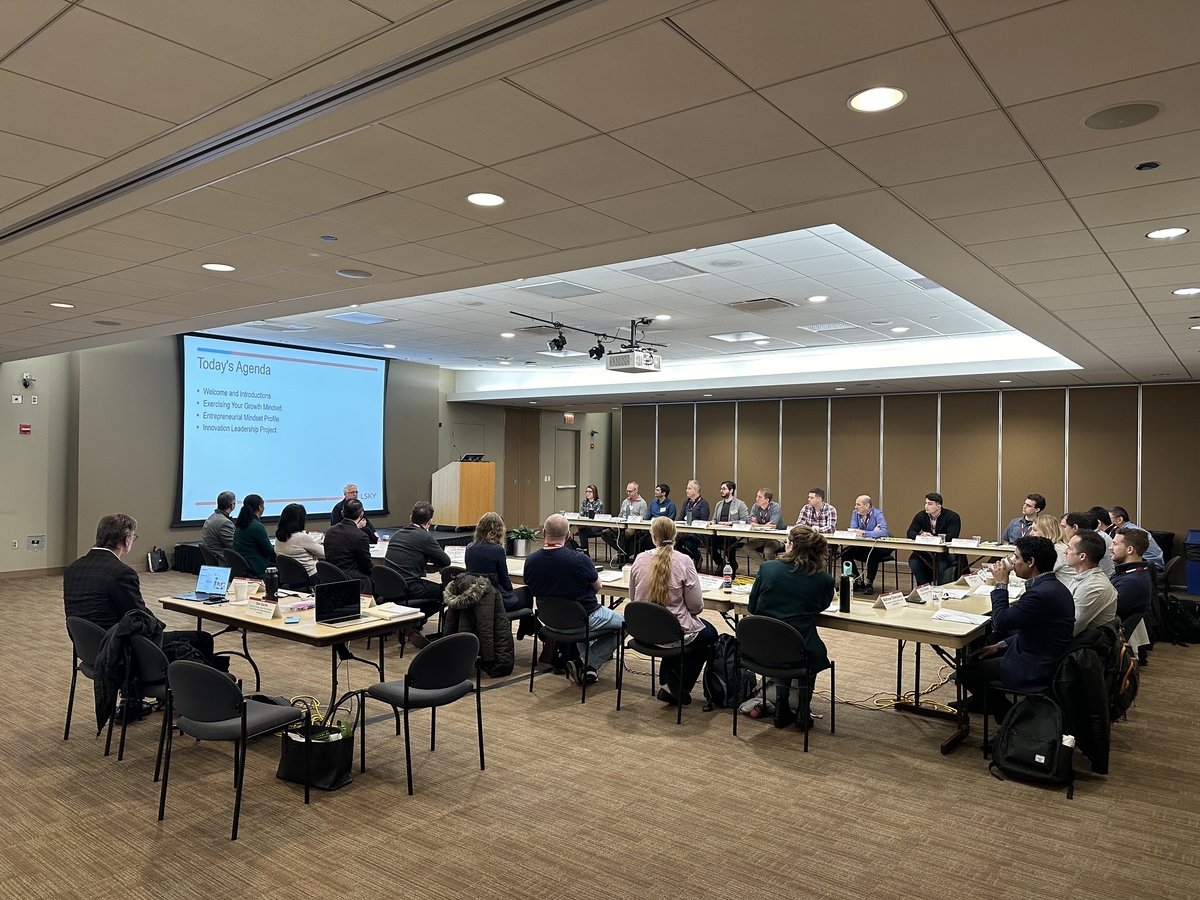
Sachs: On the first morning of the first day, we focus a lot on “mindset,” calibrating your own self-awareness and professional development broadly. Then we talk more about the entrepreneurial mindset in relation to the EMP dimensions more specifically: What do these dimensions mean? What activities are connected to them? Why should we care about them? Meanwhile, they have already taken the instrument, so we do the reveal and provide them with their results. It’s really about crafting how they see the world and understanding what it means to embrace a growth mindset. It is a way for us to say to them, ‘here’s an example of what you did to participate in that and how your results at this moment in time reflect where you are.’ In that way, because they participated in it, it’s not a lecture format. Later, we have them break into small groups to discuss the following prompts:
- • Think about your organization, what kinds of people and skills are most valued in the organization? How would you describe the culture? How do your personal characteristics and skill sets match up?
- • Discuss what you would like your professional future to look like. What kind of role do you have? What kind of work do you do? What is your organizational context?
- • Given all of the above, which elements of an entrepreneurial mindset would be particularly beneficial?
After their small-group discussions, we have them come back and have a more robust debrief with the larger group. Our goal in professional development, and in education in general, is to get people to internalize the learning, and so the benefit of the EMP is that it’s an active mechanism where folks have participated beforehand, and now they have an opportunity to review it with their colleagues.
EMP: How do you weave the EMP throughout the course?
Sachs: We challenge the participants in various workshops to think about their prior predispositions and assumptions around their own entrepreneurial mindset. The hardest nut to crack is to get them to think entrepreneurially and embrace that, so we push on that. We want them to use the EMP as a way to reflect back on areas they want to improve or learn new skills by practicing. We talk about their fear and their comfort zone and what it feels like to be in a group and talk about their own shortcomings.

EMP: What do you think is the most important benefit of the EMP?
Sachs: For us, it’s one important “piece of the puzzle” or a key data point to consider. For the National Labs, the last thing they want is to create a bunch of entrepreneurs. They want to improve how the researchers think about innovation, working in teams, making decisions and communicating effectively, and the EMP is the best tool we have found so far. These are senior researchers who have been working 20-30 years, so the program content and level of detail is a bit more nuanced. There are times when we talk about the EMP scales more intensely because the conversation lends itself to that, but it varies from cohort to cohort. Also, the fact that it is a statistically driven instrument substantiates the lectures and the other stuff they’re hearing in a way that nothing else really could. It legitimizes the work we’re doing.
EMP: Do you use any other assessment tools in the SPIN program?
Sachs: No, the EMP is the only one. We found the perfect tool and we didn’t need to look any further!
EMP: Do you ever use the EMP outside of the SPIN program?
Sachs:Yes, we run custom programs in companies all over the world that have similar core participants, so whenever we’re working on that entrepreneurial mindset component, we will use the EMP.
EMP: Thanks so much for your time today, Dan. We really enjoyed hearing about how you use the EMP, and we wish you all the best with your innovative programs.
Dan Sachs served as the Executive Director of the Polsky Center for Entrepreneurship and Innovation at the University of Chicago through June 2024. Beginning July 1, 2024, Dan will take on a new role as the inaugural Dean at Northeastern University Oakland. He can be reached via LinkedIn.

The Entrepreneurial Mindset Profile® (EMP) [emindsetprofile.com] is an excellent way to get an in-depth view of the entrepreneurial mindset and see how your personality traits and skill sets compare to those of corporate managers and entrepreneurs. Available online, the EMP provides scores on 14 different scales including Risk Acceptance, Passion, Need to Achieve, Future Focus, Idea Generation and Persistence among others. The EMP Feedback Report comes with a debrief video and a comprehensive Development Guide for continuous improvement.
Want to learn more about EMP Certification and how you can use it in your organization? Email us at [email protected] or visit the Certification page of the EMP website to see how you can start using the EMP with your clients and students.